Monthly
Check the filter, listen for new noises at the air handler, look for water at the base of the indoor unit, and confirm every supply register is open and delivering air.
Four seasons, one system
A condenser that ran fine in March can lose capacity in July. A furnace that sat idle all summer needs attention before the first cold snap. Pick a season below to see the work that belongs to it.
01Spring
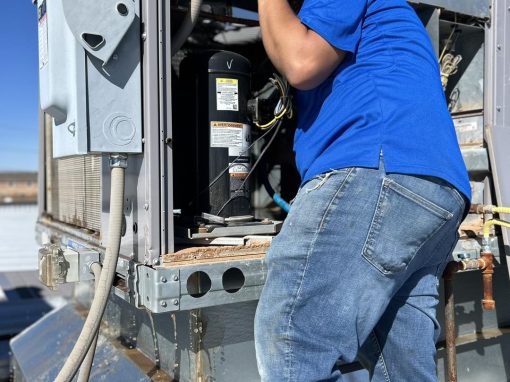
Spring is the only reliable window you have to service an air conditioner before it is running hard. Once the outdoor temperature climbs, a condenser that needs cleaning, a charge check, or a cleared service gap will not get attention until the system is under peak load.
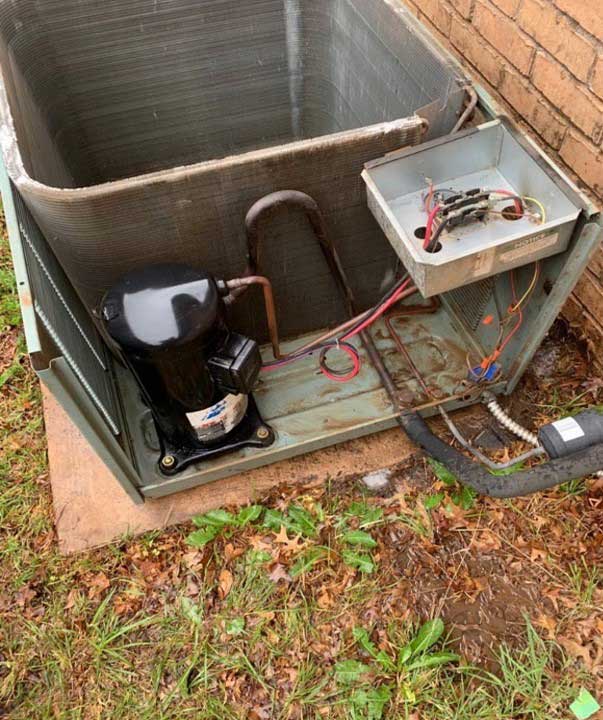
The outdoor coil collects whatever the yard produces: cottonwood seed, maple keys, oak leaves, grass clippings. Rinse it with a garden hose from the inside out so debris is pushed off the fins rather than driven deeper into them. Wash heavy build-up with a coil cleaner and soft nylon brush, then straighten any fins that have folded over.
Trim shrubs back so the unit has working clearance on all sides, and confirm the coil faces away from a wall or fence that traps heat. Keep it clear enough that a technician can reach the service valves and pull the coil for a proper fin cleaning.
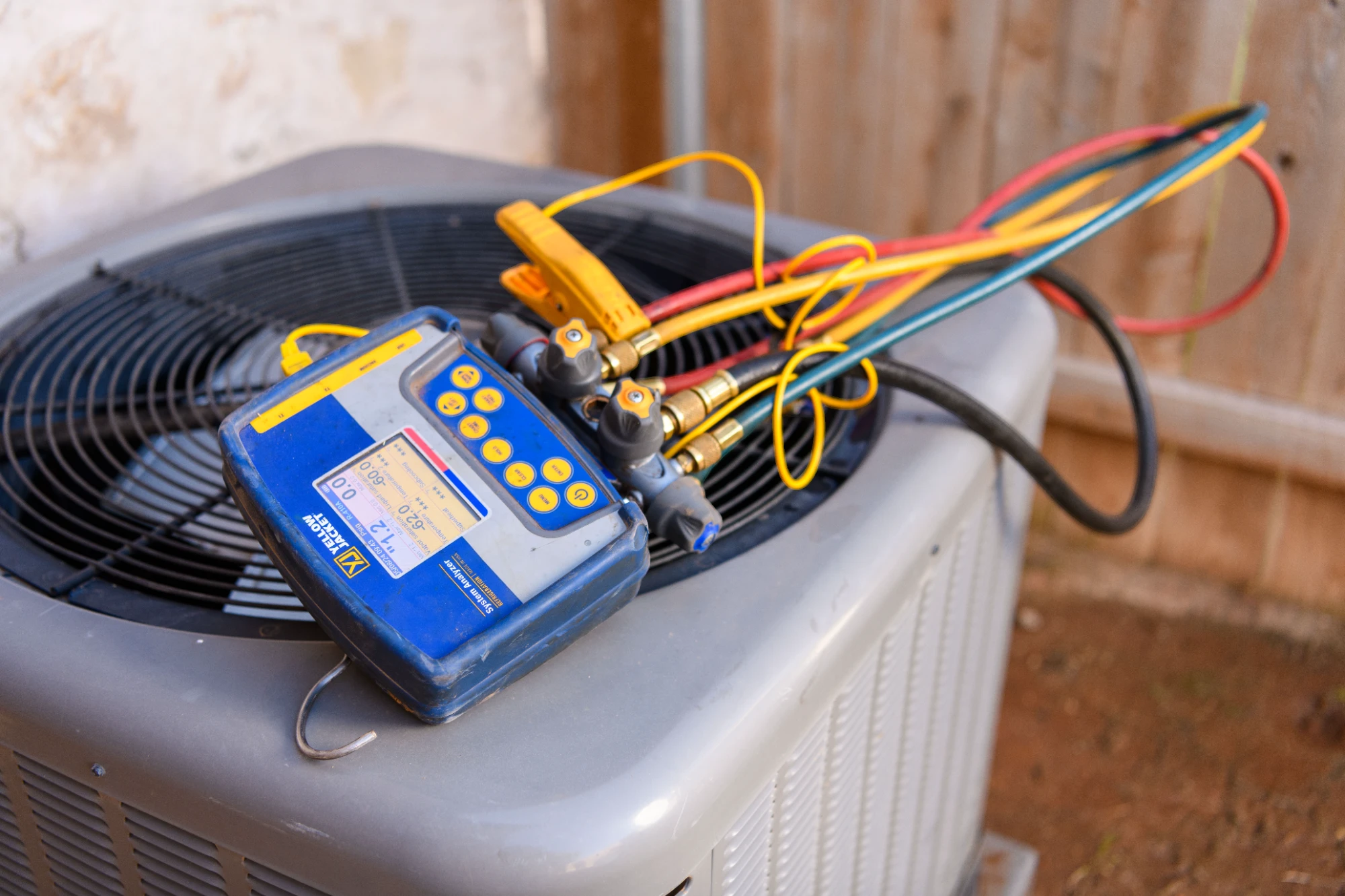
Measure superheat and subcooling rather than going by the sight glass. A glass that looks full can still mean an undercharged system, and an overcharge shows up later as high head pressure and short cycling. Record the readings, check the compressor amp draw against the nameplate, and test the capacitor and contactor for pitting and heat damage.
A spring service visit usually finds small problems that become expensive failures in July.
02Summer
Everything that can go wrong with an air conditioner is hardest to diagnose in July. The unit is running near its limits, the house is hot, and the symptoms are compressed into a short window. Knowing which complaint belongs to which cause saves a wasted visit.
On a hot afternoon the condenser has to reject more heat than it can move, and head pressure climbs. Common causes are a dirty or partially shaded coil, a restricted filter raising static pressure, low airflow over the evaporator, an overcharge, or a failing condenser fan motor. The result is loud head pressure bang, short cycling, weak air at the registers and a room that never gets comfortable.
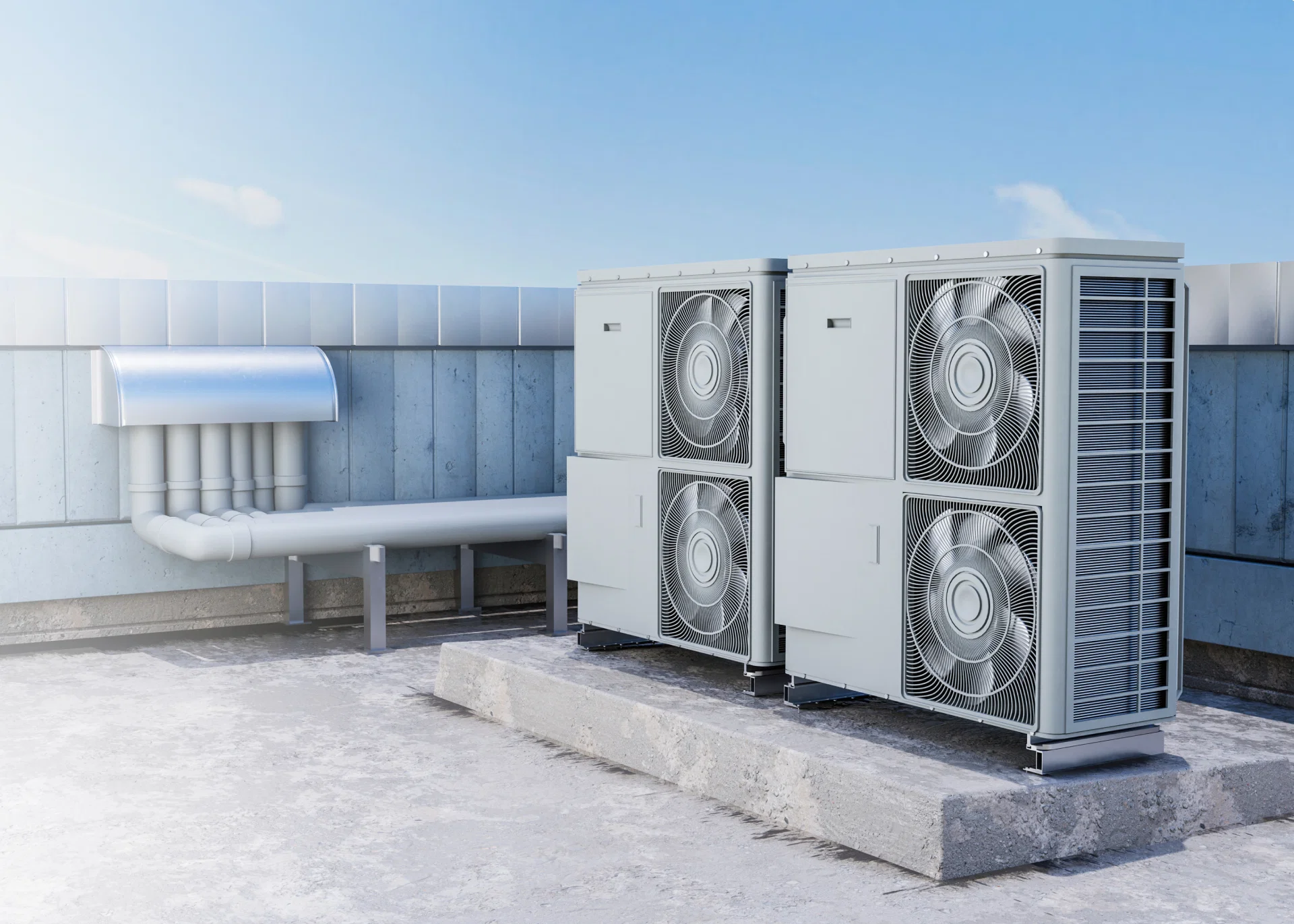
An outdoor unit needs open air on every side. Shrubs that have grown back since last summer cut airflow, raise ambient around the coil and shorten condenser life. Keep grass and debris off the coil face and leave working room for service access.
A unit in afternoon shade draws less air than one in full sun. On a thermostatic expansion valve system that reduced airflow can starve the evaporator, drop coil temperature below freezing and put ice in the pan. Ice blocks airflow, the coil drains into the pan, and the float switch shuts the whole system down. Warm afternoon exposure, a clean coil and correct charge usually resolve it.
During a heat wave, a system that cannot cool is a comfort and safety issue for older residents and pets. Say so on the call so priority is set correctly.
03Fall
A furnace is cold for six months and then asked to start within a single afternoon. Fall service is about the parts that fail at first ignition: the igniter, the flame sensor, the blower motor and the pressure switch.
Inspect the heat exchanger for cracks, corrosion and signs of soot. A cracked primary exchanger can pull combustion gases into the circulating air stream. Check flame color and shape, verify the flue is clear and correctly sloped, and confirm the vent terminates where the manufacturer specifies.
A hot surface igniter that has become porous may ground out and never light. A dirty flame sensor causes the furnace to light and then lock out on the first attempt. Test limit and rollout switches and the induced draft pressure switch rather than replacing parts by guesswork.
The blower motor, its capacitor and the motor speed are what move the heat. Change the filter before the first cold night, when the system will run continuously. Mark the date and plan on checking it monthly through winter.
Replace alarm batteries in the fall, and replace the detector itself if it is past its stated service life. Alarms belong inside, near sleeping areas, and a single alarm is not enough coverage for a home with bedrooms on more than one level. Every technician visit is an opportunity to ask whether anyone in the house has working alarms.
04Winter
Cold weather is the hardest operating condition a heat pump ever faces, and the season that generates the most emergency calls. Two problems account for a large share of them: a furnace that will not start, and a heat pump that loses capacity because its defrost controls or its drainage are not working.
In freezing weather the outdoor coil ices over, so the control board initiates a defrost cycle: the reversing valve reverses, warm indoor air melts the ice, and the unit holds the cycle for several minutes. Normal operation then pauses briefly before reversing back to heating. Melt timers, defrost sensors and the board itself are what keep this working, and a failed sensor or a shorted defrost heater can leave the unit locked in defrost or unable to produce heat at all.
Short cycling that ends in a cold house, a blower that runs with no flame, a unit that blows cold air only on cold mornings, or a frozen condensate line that has closed the outdoor unit down all point at different faults. The more accurately the symptom is described, the faster the right part gets found.
Ask for heating calls to be treated as urgent when indoor temperatures are dropping. Age, medication and medical equipment are all reasons a house cannot simply wait for the morning.
Not seasonal
Most of the useful maintenance is not tied to a season at all. A monthly five-minute habit and an annual service visit cover the majority of what prevents failures, and both are easier to do when you are not the reason someone else has no cooling.
Check the filter, listen for new noises at the air handler, look for water at the base of the indoor unit, and confirm every supply register is open and delivering air.
Clean the outdoor coil, wash the evaporator coil if accessible, inspect the condensate pan and line, and check both the cooling and heating side of the system.
Replace batteries on schedule, set a schedule that matches occupancy, and make sure the thermostat type matches the equipment. A programmable or smart thermostat cannot drive an indoor coil that is not wired for it.
Excessive static pressure across the filter or coil is one of the most common causes of both comfort problems and coil icing. Returns need enough area for the CFM the blower is moving.
Test smoke and carbon monoxide alarms, keep the area around the furnace and outdoor unit clear, and confirm the disconnect is in a dry, accessible location.
Efficiency labels such as SEER2 for cooling, HSPF2 for heat pumps and AFUE for furnaces describe general ranges for comparison. Match equipment to the home rather than to the highest number on the label.
Scope of work
Coil cleaning, blower and capacitor testing, refrigerant measurement with superheat and subcooling readings, and repair of leaks before topping off a charge.
Defrost control checks, reversing valve and defrost heater diagnostics, fan motor replacement and refrigerant work on R-410A and R-454B systems.
Igniter, flame sensor, limit and rollout switches, blower motor and capacitor, heat exchanger inspection and combustion checks on gas and electric furnaces.
Static pressure measurement, duct inspection and repair, refrigerant leak detection with dye and electronic sniffer, and compressor amp draw verification.
Flex duct repair, sealed connections, properly sized returns, register balancing and testing, adjusting and balancing where the equipment supports it.
Manual J load calculation, Manual S equipment selection, set-and-match replacement when the existing ductwork and electrical service support it, and efficiency comparisons.
Programmable and smart thermostats, humidity control, humidifiers, media filters and filtration upgrades for dust and particle control.
No-heat diagnostics in cold weather, no-cooling calls during heat waves, and triage so homes at risk are handled ahead of comfort-only complaints.
Get in touch
Describe the season, the equipment and the symptom rather than just the room temperature. Amp readings, error codes, model numbers and the age of the system all shorten the diagnosis.
For heating failures during cold weather, include the current indoor temperature and whether anyone in the home is at risk.